2009-11-22

How to Connect Two Computers without a Router

Posted by Dhiya  
6:36 PM

Let’s assume you have two computers at home and you want to connect them together so that you can easily share an internet connection between the two machines or transfer photos, music and other files from one computer to another. How do you do this?

Connect Two Computers Directly

There are two options – you can either buy a router or, if you are looking for something more simple and don’t want to spend money on new networking hardware, you can connect the two computers using a commonly-available cable. The latter method doesn’t involve any complicated network settings and you will still be able to share files, internet connection, and even printers between computers.
Things you need:
To set up this basic wired home network, all you need is an inexpensive Ethernet crossover cable and the other requirement is that network cards* (also known as LAN or Ethernet cards) should be installed on each of you computers.
[*] This should not be an issue because network cards are available on most newer machines by default but if you are working with a very old computer, you can either attach an internal LAN card to your computer’s motherboard or go for a USB Network adapter that will turn a USB port into an Ethernet (RJ45) port.
Ethernet Cables for Connecting Computers
Also see: How to Identify Computer Cables and Connectors
An Ethernet crossover cable looks like a standard Ethernet cable but the internal wiring is a little different. You can purchase crossover cables at Amazon.com or from your local computer store. If you have trouble finding them, you can purchase an inexpensive crossover adaptor and that will let you use any standard Ethernet cable as a crossover cable.

Connect Computers with an Ethernet Crossover Cable

Before connecting the two computers with a physical cable, make sure that both machine are using the same workgroup*. Here is step-by-step guide that explains how you can change the workgroup of your computers.
Changing workgroup in Windows XP – From the Start menu, right-click “My Computer.” Select Properties in the drop-down menu, and then select the second tab that says “Computer Name” from the System Properties window. Now click the “Change…” button, enter a unique Workgroup name and reboot your computer.
1. My Computer - Properties 2. Change Workgroup Name 3. Save Workgroup Name and Reboot
Changing workgroup in Windows 7 or VistaOpen the Control Panel, type “Workgroup” in the search box, and select the entry that says “Change Workgroup Name.” Click the “Change…” button, enter a Workgroup name and restart the computer. Windows 7 users can skip one step; simply type “Workgroup” in the search box in the start menu, and select the first entry, then proceed as above.
1. Search Workgroup  from Control Panel 2. Change  Workgroup - Vista or Windows 7 3. Assign Workgroup Name
Now that the workgroups are same for both computers, connect the two computers together using the Ethernet crossover cable. Simply plug-in one end of the crossover cable into the network adapter of Computer A and connect the other end of the cable to the network adapter of Computer B.
Windows will automatically recognize the new network, and you can now easily view files and folder that the other computer has shared. Simply open Networks from the Start Menu (or the Control Panel), and you should see the other computer by its name. You can then browse any shared files on the other computer, and can even utilize shared printers.
Troubleshooting If you do not see the other computer under Networks, you probably have a prompt at the top of your Network window saying that Network discovery is turned off (screenshots below). Select “Turn on Network Discovery and File Sharing.” In the next prompt, select “No, make the network I am connected to a private network.” Now you should see the other computer on the home network.
1. Turn on network discovery 2. Turn Off  File Sharing for Public Networks
[*] While it is possible to share files between two computers connected with a crossover cable without making them part of the same workgroup, the method will only work if both computers have this network set as a private network, and may still cause problems. It is therefore advisable to have both computers on the same workgroup before sharing files and printers.

Share an Internet Connection Between Two Computers

There are scenarios where you may want to share the same internet connection between two computers. For instance:
Situation A - You have setup a Wi-Fi network at home but your old desktop computer doesn’t have a wireless network card. In that case, you can use the laptop to connect to the internet wirelessly and then share that same connection with the desktop over a crossover Ethernet cable.
Situation B You have a netbook with a built-in cellular data connection. You can share that connection with any another computer at home through the crossover Ethernet cable.
Situation CYou use a (slow) Wireless USB modem with your laptop computer while your desktop is connected to an ADSL Broadband line and there’s no router at home. For any bandwidth intensive tasks, like when you want to backup photos from your laptop to an online service, you can connect the laptop to the desktop and things will happen much faster.
OK, let’s look at the steps required for sharing an Internet connection.
First, if you only wish to share internet connection and not files, both computers need not belong to the same workgroup. All you need to do is to connect the two computers with the Ethernet crossover cable, and then turn on Internet connection sharing in the computer that already has an Internet connection. The instructions vary for different versions of Windows:
For Windows XPSelect “Network and Internet Connections” from the Control Panel and click “Network Connections.”
1. Network and Internet  Connections 2. Change Network  Connection Properties 3. Allow Internet  Connection Sharing
Right-click on the network connection you wish to share (the one connected to the internet), select Properties, click on the “Advanced” tab, and then check the box that says “Allow other network users to connect through this computer’s Internet connection.” Click OK, and the second computer that you have connected to this computer with the Crossover Cable should have internet access now.
For Windows 7 and VistaOpen Control Panel, enter “network connections” in the search box on the top right and select “View Network Connections.”
Vista - Share internet  connection 1 Vista-7 - Share  Internet Connection 2 Vista-7 - Share  Internet connection 3
Right-click on the network connection you wish to share (this must be the one connected to the internet) and select Properties. Select the "Sharing" tab and then check the option that says “Allow other network users to connect through this computer’s Internet connection.” Click OK, and the other computer you have connected to this Windows 7 or Vista computer should have internet access now.
2009-10-25

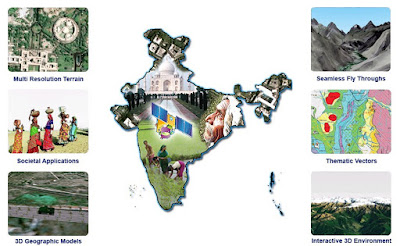
Google Earth க்கு சவால் விடும் ISRO வின் BHUVAN தளம்

Posted by Dhiya  
Tagged as:
4:04 PM

Google Earth க்கு சவால் விடும் ISRO வின் BHUVAN தளம்

http://bhuvan.nrsc.gov.in/ தளத்தில் பதிவிறக்கம் செய்யலாம்

Google Profile - Google's New feature

Posted by Dhiya  
Tagged as:
4:00 PM

Google profile

A Google profile is simply how you present yourself on Google products to other Google users. It allows you to control how you appear on Google and tell others a bit more about who you are. With a Google profile, you can easily share your web content on one central location. You can include, for example, links to your blog, online photos, and other profiles such as Facebook, LinkedIn, and more. You have control over what others see.

You can also allow people to find you more easily by enabling your profile to be searched by your name. Simply set your existing profile to show your full name publicly.

If you've been writing reviews on Google Maps, creating articles on Google Knol, sharing Google Reader items, or adding books to your Google Book Search library, you may already have a profile

Follow this link,
Google profile


2009-09-07

Mm

Posted by Dhiya  
Tagged as:
2:00 PM

Cyanide & Happiness- Waiting for the Bus

Posted by Dhiya  
Tagged as:
1:29 PM

Posted by Dhiya  
Tagged as:
11:45 AM


New Trends in ICTs Development Making Life Easier for End-users

From the time of machine code programming and mechanical adding machines through vacuum-based systems to very large integrated circuits and very high level programming languages, the main trend and focus has been the same over time – empowerment of the end-user. Recent developments have seen this initiative even improve further with several advancements being made on how we perceive the computer in the workplace.

The shift from command-driven to Graphics User Interfaces (GUIs)

In the past, the end-user was required to literally understand the command set of many software packages in the market like Dbase III+, Lotus 123, and WordPerfect 5.1. Operating systems such as MS-DOS made extensive use of the command prompt. MS-DOS had a host of both internal and external commands that the end-user was required to master in order to use the computer competently. Their syntaxes, switches, parameters and the like had to be understood. This sidelined many with the urge to use the computer but the inability to master the intricacies of software use. With the advent of Windows and Windows-based software, the user was given more flexibility and power to make maximum use of the computer. This saw many end-users begin to appreciate computers in the workplace because easy to use GUIs demystified them. All that end-users needed to know were the icons and menus to initiate processes and suddenly they would be involved in initiating complex processes such as linear and multiple regressions, document merging, spell-checking and so on at the mere click of a mouse button, giving them control over otherwise mysterious processes.

The GUI has removed the need to know the underlying command sets needed to achieve a task by providing an interface that is user friendly and easy to learn. The interface uses normal English to request users for information that would be required to complete a complex task. Now end-users need to only master a few basic processes to invoke very complex instruction sets that perform highly complex operations. The banker, for instance, no longer needs to master let alone know COBOL to input customer transactions! This is easily achieved now through a user-friendly window form thereby reducing time consumed in punching out data sequences!


The emergence of Object-Oriented Programming (OOP)

From the days of machine to high level languages, programming has seen significant developments all geared towards enabling the end-users achieve targets in the shortest time possible – especially in these times of highly capitalistic and competitive economies where time is money. By moving from binary notations to mnemonics and finally to object oriented programming where users only need to drag and drop pre-written self-contained, reusable components, software design is no longer entirely the preserve of specialists – it has come closer to end-users. A computer operator can now use such objects to enhance the performance of application software in the workplace through customisable tasks made possible by macros. Talk of Rapid Application Development (RAD) come home to roost!

By quickly glancing at the source code of a program, one can easily make head and tail of the concept being developed – thanks to very high level programming languages. The end user no longer needs to spend hours coding sub-routines and functions that are part of a very lengthy and tedious procedural activity, they only need to conceptualise the problem at hand and communicate this appropriately to the computer and leave the tedious work to the Control unit.


The birth of mobile computing

Gone are the days when end-users could not conceptualise finalising an important project proposal without going to the office - because that was where the computer was! With the advent of laptops, mobile phones, wireless networks, and so on, company targets can still be achieved even when people are separated by geographical boundaries from their workplace. This has given the term ‘office’ a new meaning. The concept of the home office has been made a reality and now the corporate manager can still compile his reports in time and watch his favourite TV show at the same time. This concept of enhancing mobility has greatly empowered the end-user. With wireless communication, executives can get on-the-minute updates on stock trends and country profiles of prospective investing grounds long before their planes touch ground on their way to an investors’ meeting. This is made possible via internet connectivity.

The emergence of new information technology infrastructures

Computing is no longer looked at in isolation. The present day end-user perceives a computer in a different perspective. The mention of a computer brings to mind inter-connectivity and remote accessibility of pooled resources. This concept of networking has been there for sometime and the terms LAN, WAN, CAN and MAN are common. Now a new concept in this area promises even greater collaboration and networking – the new IT technologies take the concept of networking a level further by combining several systems together to come up with a collection of interlinked heterogeneous systems. Points Of Sale (POS), PDAs, cellular phones, LANS and mobile computing devices all operating on varying transmission protocols are inter-linked together with the sole objective of placing information at the end-users’ palm. The end-user can now request for ambulance services by filling out and sending an online form that is relayed to a hospital database or emergency mobile unit that dispatches the nearest assistance within a fraction of time. In the comfort of a home PC the end-user can shop on-line without a problem – a process that involves collaborative linkages with his bank, the supermarket, ISPs and security agencies that ensure a clean transaction is facilitated.

The arrival of the Internet.

With the development of the Internet, the so-called information superhighway, the end-user can not only communicate cost-effectively, but he can engage in hi-Tec teleconferencing where persons are pooled together in board meetings in virtual space. Technologies like Usenet, Internet Relay Charts (IRC) and e-mails have made communication so cheap and effective thereby transforming the world into a global village. With the use of very user-friendly GUIs, users can navigate through hypertext with ease obtaining very valuable information about the world in their living rooms. The internet has allowed organisations and corporations to start thinking beyond their offices and local markets – it has broken geographical boundaries allowing greater collaboration, communication, bi-lateral and multi-lateral trade. At the end of the day the end-user gains the power of communication in a way never imagined before. Gone are the days of unreliable snail-mails that took ages and were more costly and often times plagued by theft.

Our Sponsors

Viewers

Translate

Proudly Powered by Blogger.
back to top